Custom hotel furniture is priced per model, not per project. That is why a 34-key boutique hotel and a 300-key resort can be quoted 40% apart for the same chair: one order carries the tooling on its own, the other spreads it across two hundred pieces.
The cost is real, and it is not fixed. Six levers move it, and five of them are pulled before you ever ask for a discount.
If you only read one paragraph: cut the number of distinct models, buy inside a production window that is already running, release the order in two risk-based stages, and check whether a 20ft container beats the LCL quote you were given. On a 30–80 key project those four moves usually recover more than any discount conversation.
The cost stack behind a hotel furniture minimum order quantity
Every quotation for custom hotel furniture contains four costs that do not care how many pieces you order.
| Cost | What it covers | Does it shrink with volume? |
|---|---|---|
| Set-up | Drawings, jigs, CNC program, first-article inspection | No — it is fixed per model |
| Material overage | Fabric roll ends, foam block offcuts, veneer bundle matching | Slightly, then stops |
| Quality control | First article, in-line checks, pre-shipment inspection | Yes, per unit |
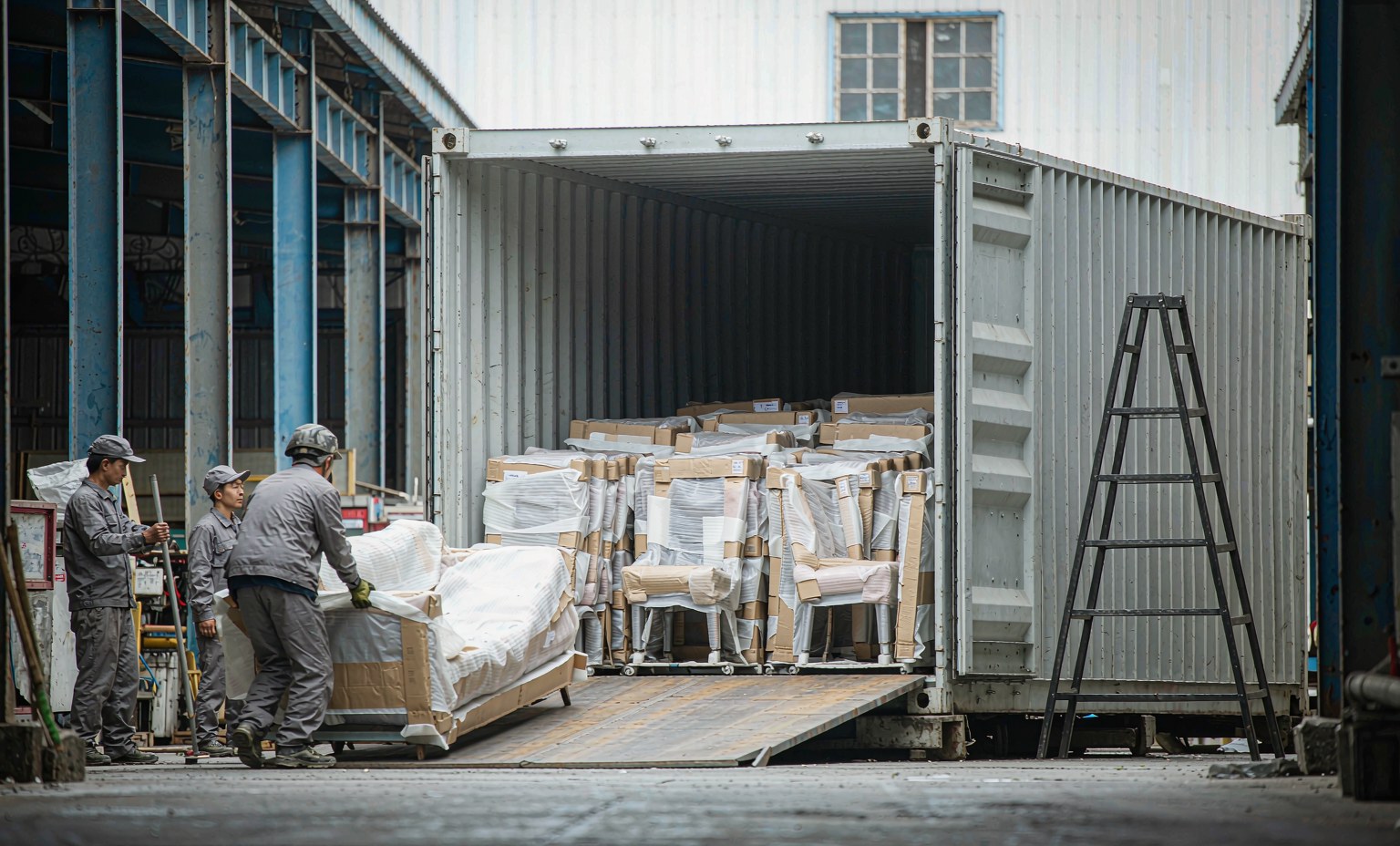
| Container space | Cubic metres, regardless of invoice value | No — furniture is bulky |
At twelve pieces the set-up dominates the unit price. At two hundred it disappears inside it. Nothing about the factory’s behaviour changes in between.
Why the same chair is 40% cheaper at 300 keys
A chair with €6,000 of engineering and tooling behind it costs €500 extra per piece at twelve units and €20 extra at three hundred. Add the fabric cut charge and the foam overage, and the gap you were quoted is arithmetically normal.
This is the most useful thing to know when a small-project quote looks unreasonable: the number is usually not margin, it is division.
Ask for three numbers instead of “what is your MOQ”
Minimum order quantity is too blunt to get a useful answer. Ask for the three floors separately:
- Minimum per model — driven by tooling and the first article
- Minimum per finish — driven by the spray or powder batch
- Minimum per fabric colourway — driven by the mill’s roll and dye lot
The third is usually the real constraint, and often the easiest to move: a running stock colourway carries no cut charge, while a special order in the exact shade from the render may bring a 40-metre minimum of its own.
Lever 1 — Cut the SKU count before you negotiate the price
A 34-key hotel with four room types does not need four desk chairs. It needs one chair in three colourways, with the difference carried somewhere else.
Where the difference actually registers
Guests do not compare rooms side by side; they remember a mood. Move the differentiation to the headboard, the artwork, the wall finish and the lighting, and the seating can be standardised without the rooms feeling identical.
The guest room furniture range is usually built this way: two or three chair frames across an entire floor plate, with fabric and finish doing the varying.
A one-page SKU sheet that gets better quotes
Before you send an enquiry, put this on one page. Factories quote faster and lower when the request is unambiguous.
| Field | Example | Why it matters |
|---|---|---|
| Code | GR-CH-01 | Every later document references it |
| Room type / area | Deluxe, 18 keys | Quantities roll up correctly |
| Frame | Oak, 620 W | Stops “similar model” substitutions |
| Finish | Walnut stain, 15% sheen | Sets the spray batch |
| Fabric | Code + colourway | Sets the mill order |
| Qty | 18 | Drives the whole calculation |
Lever 2 — Buy inside a production window
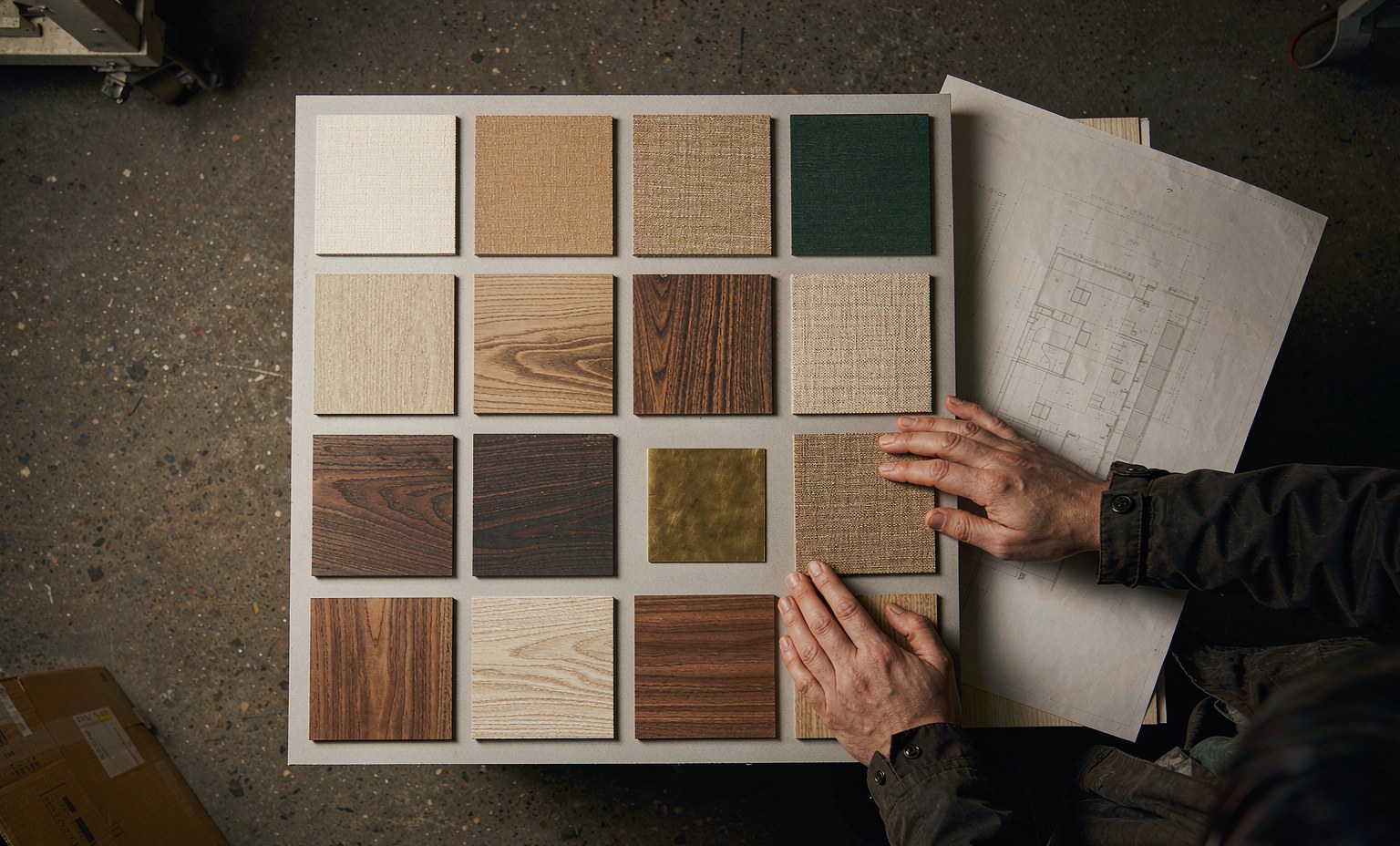
Factories run families of similar work. If your finish is close to something already scheduled, your twelve lobby chairs can often join that batch rather than wait for a line of their own.
The exact question to ask
Not “can you do a small order” but:
Which frame types and finishes are running in the next eight weeks, and what would it take for my quantities to fit into one of them?
The answer is sometimes a small colour change, sometimes a four-week wait, sometimes a no. All three are more useful than a price.
What a good answer sounds like
A useful reply names a frame, a finish and a week. “We can put 12 chairs into the walnut batch loading in week 34, if you accept the standard stain” is an answer. “We will see what we can do” is a request for more information, and usually means the enquiry landed in a sales inbox rather than with planning.
What to change if the window does not fit
- Swap the finish, keep the frame. A standard RAL or a running wood stain removes the batch cost entirely.
- Accept a later ship date. Waiting for a shared batch is cheaper than paying for a private one.
- Trim one model. Dropping a single low-quantity item often moves the whole order into a better bracket.
Lever 3 — Release in two stages, by risk
Do not split the order 50/50. Build one mock-up room and a slice of the public area, inspect them in place, then release the balance.
What the mock-up room has to prove
Check these six, in the room, with the real lighting on:
- The desk chair back clears the drawer when the drawer is open
- The nightstand top sits below the switch plate, not across it
- The wardrobe door opens past the bed without touching the duvet
- The fabric reads the same colour under 2700K as it did in the sample room
- The luggage bench takes a 23kg case without flexing at the centre
- The chair legs do not mark a light floor when pulled out
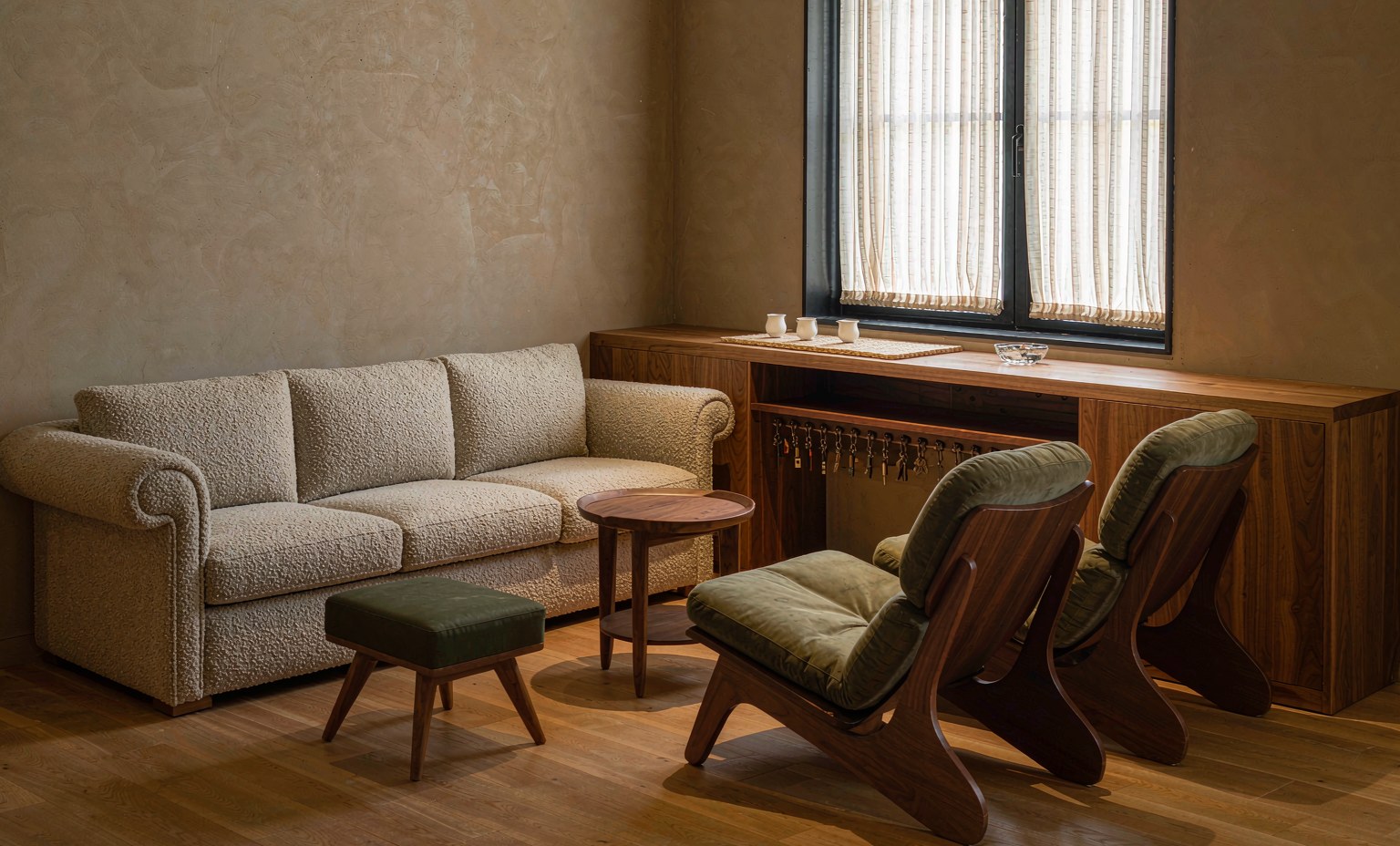
Public area mock-ups matter more, because that is where the wear is. Our hotel lobby furniture projects usually approve one seating group in place before the rest of the floor is released, for exactly this reason.
What a second shipment really costs
- Storage is charged by volume per week, and upholstery is the worst offender
- Quotations carry a validity window; a release three months later may be repriced
- Two shipments mean two freight minimums, two document sets, two insurance policies
- Two production batches can differ in finish — keep 5% spare fabric from the approved dye lot
Put the release date in the contract
A phased order needs a dated second release, not a promise to order later. Without that date the price validity lapses, the material may be discontinued, and the batch you were counting on has already moved on.
Lever 4 — Get the container maths right
Furniture is light and bulky, so ocean freight charges you for air. LCL is billed on volume or weight, whichever is greater, which means the number that decides your freight cost is cubic metres.
| Load | Usable volume (approx.) | What it holds |
|---|---|---|
| LCL, 8–10 m³ | 8–10 m³ | Seating for roughly 12–15 keys |
| 20GP | ~28 m³ | 12–14 three-seat sofas, or 35 lounge chairs, or 150 dining chairs |
| 40HQ | ~65 m³ | 28–32 sofas, or 85 lounge chairs, or 330 dining chairs |
Illustrative figures based on typical export packing. Real fill depends on carton sizes, whether backs are knocked down, and how much of the load is casegoods.
The 15 m³ turning point
Below roughly 15 m³, LCL usually wins and is the honest answer for a first mock-up shipment. Above it, price a 20ft container door to door before you commit: your goods are handled at the origin warehouse, again at the consolidation facility, again at destination, and each of those is a chance for a corner to meet a forklift.
Compare door to door, not port to port
The LCL quote you were given is usually port to port; the container quote often is not. Add destination charges, delivery to site and unloading to both sides before comparing — on small volumes that line can be 15–25% of the total, and it rarely appears in the number that gets forwarded to the owner.
Mixed loading, and where it goes wrong
A real hotel package is rarely all seating. Chairs, sofas, casegoods and loose FF&E from the restaurant and bar range have different weights and different fragility, and the heavy items go on the container floor, not on top of a sofa.
Ask for a loading plan with the booking, not after the container is at the door. A one-page sketch of what goes where prevents the most common damage claim in the category.
Lever 5 — Sample fees, and the credit you should ask for
What a sample actually includes
A sample is a short production run: a cutting ticket, a set-up, a metre off the roll, an upholsterer’s afternoon. That is why fees exist, and why “free sample” usually means the cost was moved into the production price.
Write the credit into the quote
A fair structure is a sample fee credited in full against the purchase order above a stated quantity. Ask for it in the quotation itself, in one line: sample fee X, deductible from the first production invoice.
If you need a piece developed rather than repeated, the fee also covers drawing work — that is what the custom design process prices, and it is worth paying once rather than discovering a tolerance problem on site.
Three lines that make an approval stick
- The finish code and fabric reference exactly as printed on the sample tag — never “the grey one”
- Any deviation you are accepting, written as a deviation (“seam pitch 6 mm instead of 5 mm, accepted”)
- The name of the person approving and the date
An approval that says “looks good” protects nobody, and it is the first document to go missing when something goes wrong.
Lever 6 — Measure the route before the furniture exists
The most expensive mistake on a small project is not a price. It is a two-metre sofa that cannot turn the corner into the lobby.
Measure four things, and photograph each with a tape measure in frame:
- Corridor width at the tightest corner
- Lift door opening and cabin depth
- The turn from the service entrance
- The stairwell, if there is no lift
Send the four photographs with the order. A factory can adjust a plinth, split a frame or reduce a depth in week two; nobody can adjust a finished sofa in week twenty.
Five mistakes that cost more than the discount
- Six fabrics across four room types. Every colourway adds a mill minimum and a cutting set-up.
- Asking for a discount before asking for a production window. The second is worth more.
- Splitting the order 50/50. Split by risk instead — mock-up first, balance after inspection.
- Accepting “or equal” on the fabric. It is the phrase that turns a specification into a suggestion.
- Shipping eighteen cubic metres as LCL. At that volume a 20ft container is usually cheaper and arrives sealed.
Questions that come up on the first call
Is there a minimum order for custom hotel furniture?
Usually yes, but it is three minimums rather than one: per model, per finish, per fabric colourway. A project that consolidates models and picks a running colourway can clear all three at 30–40 keys.
Can a small hotel buy direct from a Chinese factory?
Yes, and it is common below 100 keys. What changes is not the factory’s willingness but the amount of specification work you have to do yourself — SKU sheet, finish codes, loading plan, route measurements.
Should we buy FOB or DDP?
FOB if you have a forwarder and want to control cost. DDP if you want one number and one point of contact. On small volumes, ask what the insurance actually covers before choosing: total loss only, or total loss plus damage?
How long does a 30-key package take?
Ask for a schedule with named milestones rather than a lead-time figure: drawing approval, sample approval, material in-house, production start, inspection, loading. The date that matters is the loading date, and it is the only one that can be held to.
Who manages the FF&E schedule if we have no procurement firm?
Smaller owners usually do it themselves, with the factory quoting against a room-by-room list. It works when one document carries quantities, finish codes and the delivery address, and everyone quotes against that same document. Examples of how that looks in practice are in our project cases.
A 30-key hotel does not need a smaller factory. It needs fewer models, a schedule it can join, and a loading plan that fits the actual building.
Send the room list, the finishes you like and the first arrival date through the project desk and the reply can come back as a schedule rather than a number.