Choosing between Chinese vs Western hotel furniture manufacturers feels like a question about geography. Every hotel project starts the same way: a design brief, a budget, and a search for suppliers. Within twenty minutes of typing “hotel furniture suppliers” into a browser, buyers have typically formed three assumptions. The Chinese factory will be cheap but risky. The European manufacturer will arrive on time but at a premium that blows the budget. And the right choice is somewhere in between — a mid-priced supplier that splits the difference.
None of those three assumptions is the reason projects succeed or fail.
The buyers who open on schedule and within budget made a different set of decisions: they matched the supplier’s production tier and material capability to the project’s real specifications, they controlled quality before production rather than after, and they structured contracts so that corrections cost the supplier, not the project. That is the actual formula. Geography is secondary.
This guide unpacks the two myths that dominate hotel furniture sourcing in 2026 and replaces them with a decision framework that works whether you are fitting out a 30-room boutique in Lisbon or a 400-key resort in Riyadh.
Disclosure: MingMeng Furniture is a Guangzhou-based manufacturer, so we write from the Chinese supplier side. The criteria below are supplier-neutral — every check can be applied to us, to a competitor, or to a European factory.
Short answer: Neither geography is automatically safer. Match the supplier’s tier to your hotel tier, category complexity, and volume; verify certifications and references independently; approve a physical production sample before bulk production; and write the approved sample, inspection rights, and a change-order freeze into the contract. As an indicative planning range, Chinese quotes commonly come in roughly 30–45% below comparable European quotes — but only when the scope is confirmed first.
Key Takeaways
- “Chinese vs. Western supplier” is the wrong first question. The right question is project fit by tier, category, and volume.
- A Chinese manufacturer with a documented quality system outperforms a European factory with a glossy catalogue and no inspection protocol.
- A buyer who controls pre-production samples and inspection milestones spends less than one who relies on post-delivery remediation.
- The lowest quoted price and the highest claimed capacity are both red flags when the project scope has not been confirmed.
- Compare suppliers on landed cost, not unit price: freight, duties, insurance, and inspection change the ranking.
- Request before signing: ISO 9001, CAL-117 / BS 5852 (upholstery), FSC / CARB Phase 2 (composite wood), and a written warranty.
The Two Myths That Govern Hotel Furniture Sourcing
Myth 1: “Chinese manufacturers are cheap — but quality is a gamble”
The price gap between Chinese and Western manufacturers is real and structural. As an indicative planning range, a Foshan factory quoting 200 guestroom casegoods commonly comes in roughly 30–45% below a comparable European quotation for similar specifications, depending on materials, finish, and volume. That gap reflects lower labour costs, a concentrated supply chain in the Pearl River Delta, and decades of accumulated hospitality tooling.
But “cheap” mischaracterises the risk. The failure mode in China sourcing is not cheap materials — it is uncontrolled scope: a quotation built on assumed specifications that diverge from the approved sample, batch-to-batch inconsistency when production runs exceed a factory’s calibration, and communication gaps that surface as defects rather than corrections.
Buyers who manage those risks successfully treat the quotation as the beginning of a negotiation, not the end of a search. They request samples before production, document the approved sample with photography and material tags, and build inspection milestones into the contract.
The buyers who fail are the ones who chose a supplier based on a showroom visit and a competitive unit price, and then discovered during pre-shipment inspection that the finish had shifted three shades lighter between the sample and the production run.
Myth 2: “Western manufacturers are safe — but the premium is indefensible for large orders”
European and North American manufacturers carry a genuine advantage in three areas: design heritage, documentation standards, and legal certainty for projects in regulated markets. If you are specifying a bespoke executive lounge for a five-star property and your brand standards require traceable chain-of-custody for every component, a Swiss or German manufacturer is a rational choice.
The myth is the blanket assumption that Western production guarantees quality. A manufacturer with ISO 9001 and a respected brand can still produce a batch that fails fire code testing, ships the wrong veneer grade, or delivers six weeks late if its own supply chain is disrupted. The brand protects the showroom; it does not automatically protect your project timeline.
The premium becomes indefensible when a 300-key hotel project is quoted by a European factory with a minimum order quantity that forces a single production run — and a change order after prototype approval costs as much as the original order.
Chinese vs Western Hotel Furniture Manufacturers at a Glance
| Tier 1: Large Chinese manufacturers | Tier 2: Mid-size Chinese manufacturers | Tier 3: European / North American manufacturers | |
|---|---|---|---|
| Best for | 100+ key hotels with defined brand standards and repeat orders | 30–150 key upscale and boutique hotels with custom requirements | Luxury and ultra-luxury properties where design authorship or contract jurisdiction matters |
| Indicative price | Baseline | About 10–20% above Tier 1 | About 40–80% above comparable Chinese production |
| Typical lead time | 10–18 weeks (custom casegoods); 12–22 weeks (upholstered seating) | Comparable to Tier 1; confirm per project | 14–24 weeks |
| Minimum order | Higher than Tier 2; negotiable by combining SKUs | 2–10 sets per SKU is common | Often from 50 units per SKU |
| Documentation | ISO-certified facilities, in-house engineering, CAD-to-shop-drawing | More responsive communication and engineering flexibility; verify certificates | Strong documentation and legal certainty in regulated markets |
| Main risk | Drift between approved sample and production run | Capacity limits on very large or compressed projects | Premium cost; change orders after prototype are expensive |
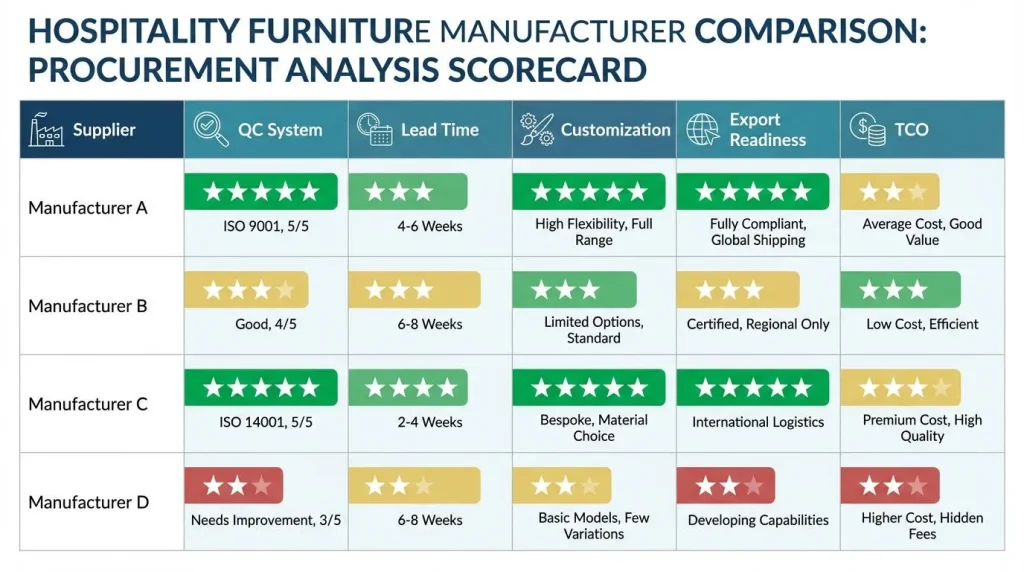
Figures are indicative planning ranges, not quotations. Always confirm against a written quotation for your specification.
The Decision Framework: Tier Matching
The question is not Chinese or Western. The question is: what does your project actually need, and which supplier tier fits it?
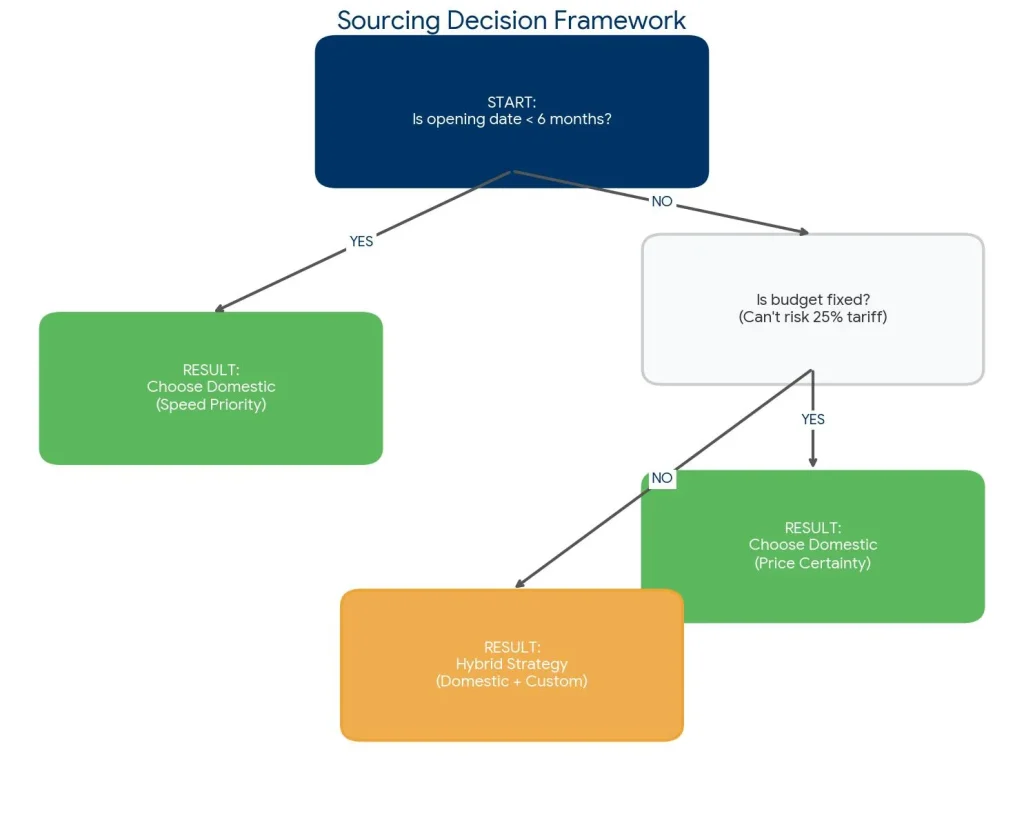
A useful starting point is a three-axis assessment:
| Axis | Why it matters |
|---|---|
| Hotel tier | A 30-key boutique with bespoke millwork and designer fabrics has different material and craftsmanship requirements than a 300-key select-service property with laminate casegoods and contract upholstery |
| Category complexity | Upholstered seating (foam, fabric, frame joinery) requires more manufacturing precision and QC checkpoints than casegoods (substrate, hardware, edge band) |
| Volume and timeline | 200+ rooms in 16 weeks demands a factory with parallel production lines and documented shift changeovers; 20 rooms in 24 weeks can accommodate a smaller, more custom operation |
Once those three axes are clear, the supplier landscape resolves into tiers.
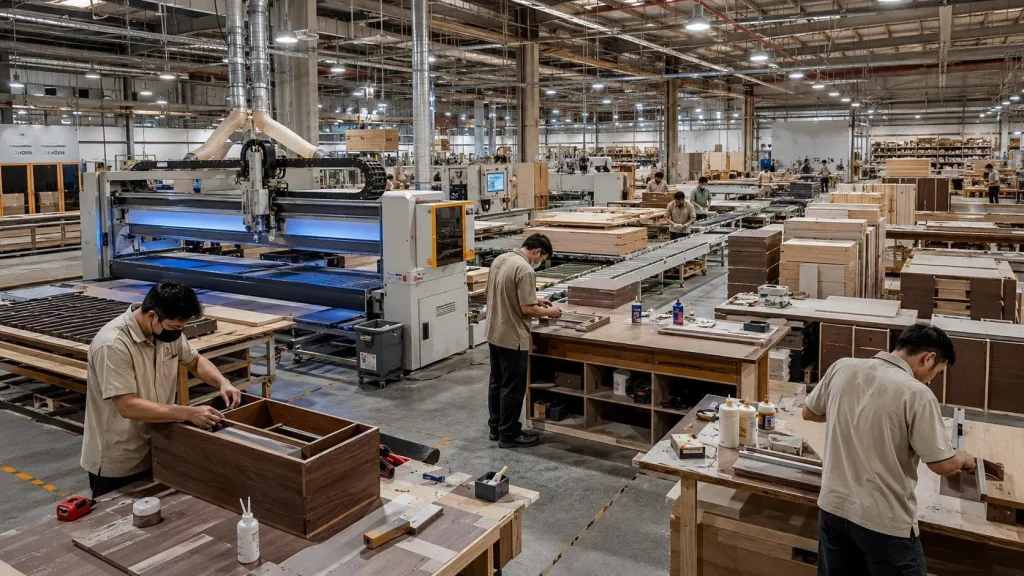
Tier 1: Large-scale Chinese manufacturers (Foshan / Heshan / Zhongshan). Best for 100+ key hotels with defined brand standards, repeat-order requirements, and moderate customisation. These factories operate ISO-certified facilities with in-house engineering, CAD-to-shop-drawing capability, and container consolidation logistics. They are the category that has most closed the quality-documentation gap with Western equivalents over the past decade. Lead time is 10–18 weeks for custom casegoods and 12–22 weeks for upholstered seating.
Tier 2: Mid-size Chinese manufacturers with design capability. Best for 30–150 key upscale and boutique hotels. These factories — smaller Foshan workshops and Guangzhou-based specialists — offer more responsive communication and greater engineering flexibility than Tier 1, at a premium of roughly 10–20% above mass-production equivalents. They are the sweet spot for projects involving custom millwork, non-standard dimensions, or bespoke upholstery.
Tier 3: European and North American manufacturers. Best for luxury and ultra-luxury properties where design authorship, European material sourcing, or contract jurisdiction matters more than unit cost. MOQs typically start at around 50 units per SKU, lead times run 14–24 weeks, and the premium over comparable Chinese production is roughly 40–80%.
Rule of thumb: For budget-conscious hotel projects with standardized furniture specifications, Tier 1 or Tier 2 Chinese manufacturers are often worth considering due to their competitive pricing and flexible production capabilities. For luxury and ultra-luxury projects involving proprietary designs, specialized materials, or strict European brand requirements, European or North American manufacturers may offer additional advantages. However, the final decision should be based on product specifications, manufacturing capabilities, quality assurance, lead times, and total landed cost—not geography alone. For a detailed breakdown of hotel furniture costs, see our Hotel Furniture Cost Guide.
Landed Cost: The Number That Actually Compares Quotes
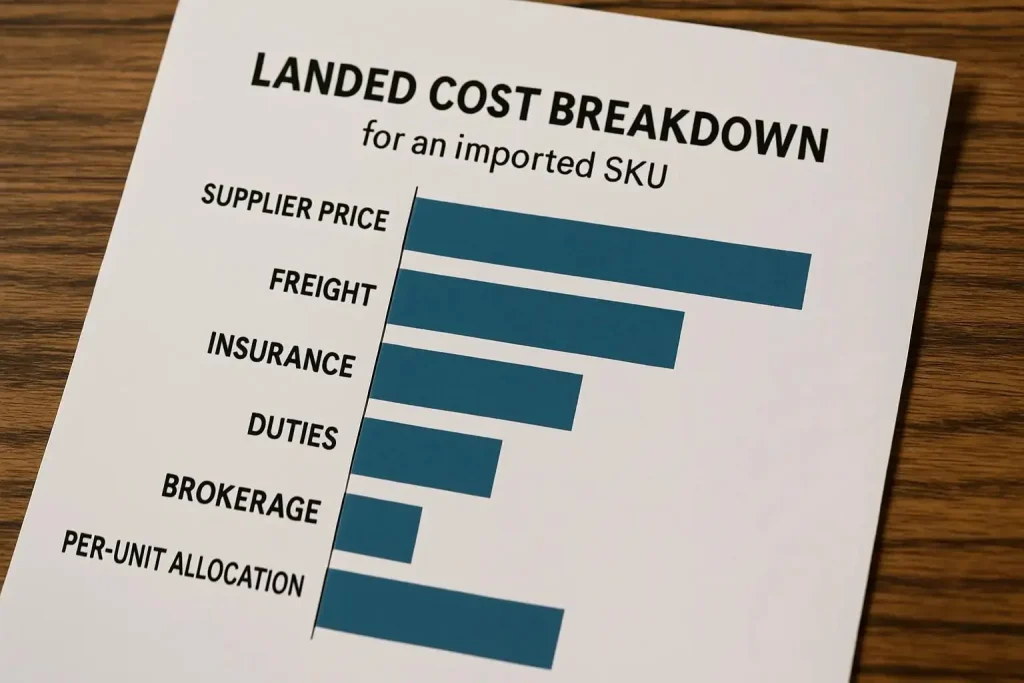
A unit price is not a cost. Freight, insurance, import duties, third-party inspection, and local delivery can add roughly 15–35% to the unit price, and the mix differs by origin and destination.
Import duties and tariffs on Chinese-made furniture have changed repeatedly in recent years. Before you compare a Chinese quotation with a European one, confirm the current duty rate for your product’s HTS code and your destination country, and ask every supplier to quote on the same Incoterms basis. A low factory price that excludes freight and duties will frequently lose to a higher price that includes them.
Evaluating a Chinese Hotel Furniture Supplier: The Checklist That Matters
Whether you are shortlisting Tier 1 factories or qualifying a Tier 2 workshop, apply this checklist before signing a contract. Every item is verifiable before you commit.
Pre-qualification (before requesting a quotation)
- Verify the legal entity and factory address. Request the business licence and cross-reference it with the address you will visit or video-audit. A supplier who sends photographs of a different factory is disqualified.
- Request ISO 9001 certification and verify it with the issuing body, not just from the certificate itself. Check the scope: it should cover furniture manufacturing, not just “trading.”
- Ask for three comparable project references with verifiable hotel names, room counts, completion dates, and a direct contact at the property or procurement firm.
- Request a virtual or in-person factory tour. Evaluate CNC equipment for precision cuts, the spray booth environment for finishing, QC documentation practice (are checkpoints photographed and signed?), and workforce stability (high turnover means inconsistent output).
Sample evaluation (before approving production)
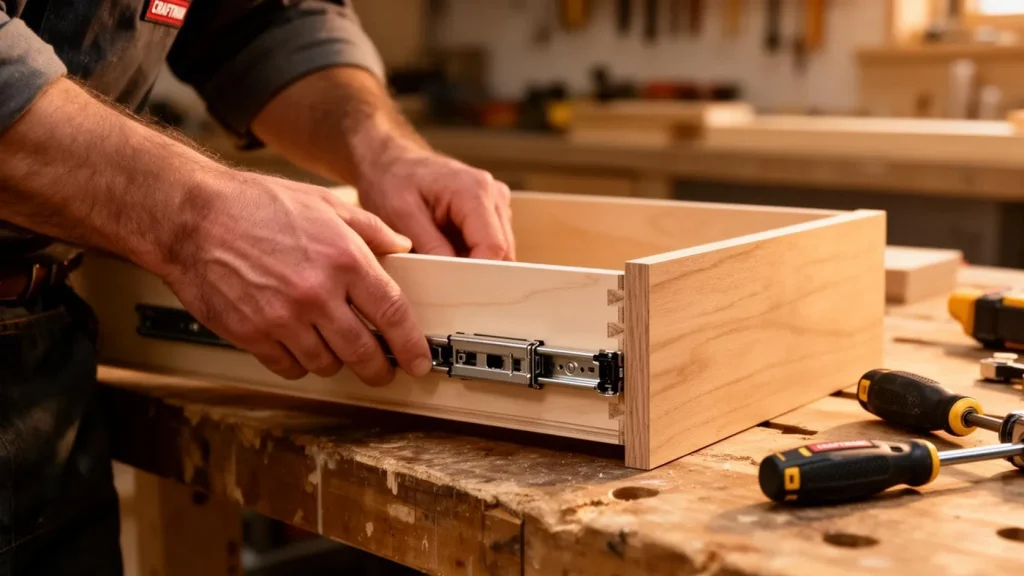
- Request a physical production sample of the key item, not a showroom display piece. Inspect frame joinery under the seat cushion, open and close drawers 20+ times, check for play in joints, and press the foam to judge density. A sample that fails under casual handling will fail in bulk production.
- For upholstered seating, verify fabric abrasion rating (Wyzenbeek 30,000+ double rubs or Martindale 40,000+ cycles for heavy commercial use), foam density (high-resilience, at least 2.2 lb/ft³ / 35 kg/m³), and fire compliance documentation (CAL-117 for the US, BS 5852 / CRIB-5 for the UK/EU).
- For casegoods, verify the substrate (plywood, not particleboard, for structural components), veneer thickness and application method, edge banding quality, drawer slide rating (30 kg load or higher for hotel use), and hardware specification (grade 316 stainless for coastal properties).
- Document the approved sample with labelled photography: finish under natural light, close-up joinery, hardware, and a foam cutaway. This is your reference standard for pre-shipment inspection.
Commercial and logistics
- Confirm export experience to your destination market. Ask for documentation from at least two comparable shipments (bill of lading, packing list, customs clearance records).
- Clarify Incoterms and what they include. Does the quotation cover delivery to port, insurance, and customs clearance, or is it FOB factory only? The landed-cost difference can be 15–35%.
- Confirm minimum order quantities. For small projects, 2–10 sets per SKU is common among Tier 2 suppliers. For large orders, negotiate MOQs down by combining SKUs and aligning delivery phases.
- Check the payment structure. A common and defensible milestone schedule is 30% deposit → 30% on sample approval → 25% before shipment → 15% after installation. A supplier who demands more than 50% before production begins is a red flag.
The contract must specify
- Technical drawings, material schedules, and finish samples as contract exhibits, not loose attachments.
- A change-order freeze point: the moment after which changes to approved samples trigger a cost and timeline impact clause.
- Warranty: a minimum of 3 years on the structural frame (negotiate up to 5 years on frames for larger projects), 2 years on upholstery foam and fabric with manufacturer-recommended care instructions, and 1 year on finishes.
- Spare parts: at least 3% spare hardware and fabric per order, plus an availability commitment for 5 years.
- Inspection rights: your right to conduct, or appoint a third party to conduct, pre-shipment inspection and to reject non-conforming lots before loading.
Five Red Flags That Signal a Supplier to Avoid
- An unusually detailed final price before dimensions, materials, and construction are confirmed. No qualified manufacturer can price a custom casegoods unit accurately without a technical drawing. An instant, precise quotation is a template price, not a real production cost.
- No physical sample before production begins. A supplier who refuses or delays sample production on cost grounds, or cannot produce one sample within 3–4 weeks of a request, is telling you something important about their process.
- Cannot explain composite wood grades or provide formaldehyde documentation (CARB Phase 2 / E1). This signals a supplier who is not controlling their material supply chain.
- Pressure to commit before the brief is complete. A supplier who pushes for a signature before room dimensions, material specifications, and a realistic delivery date are confirmed is prioritising their pipeline over your project.
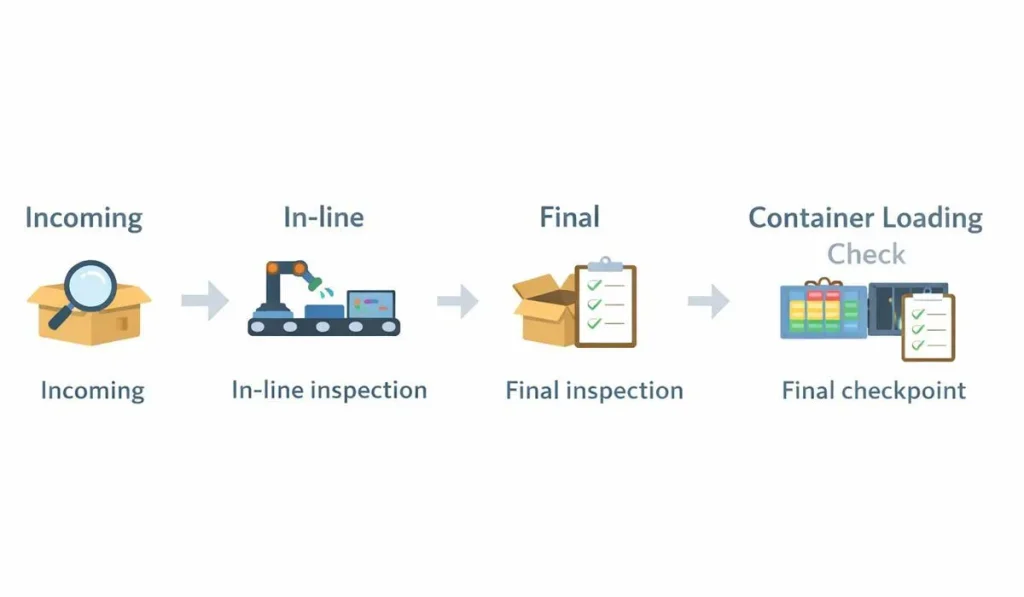
- No documented inspection process. Asked “what does your quality control look like?”, a qualified supplier explains pre-production material checks, in-process audits, and final inspection against an approved sample. A supplier who says “we have QC” and cannot elaborate is managing quality reactively.
Why MingMeng Is Structured for Tier 2 Hotel Projects
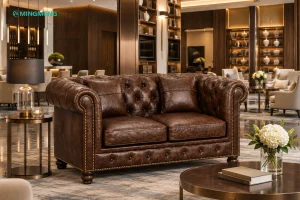
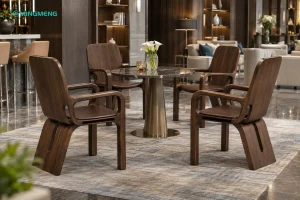
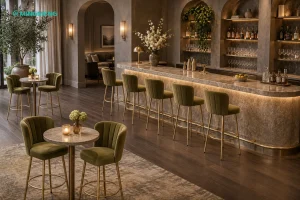
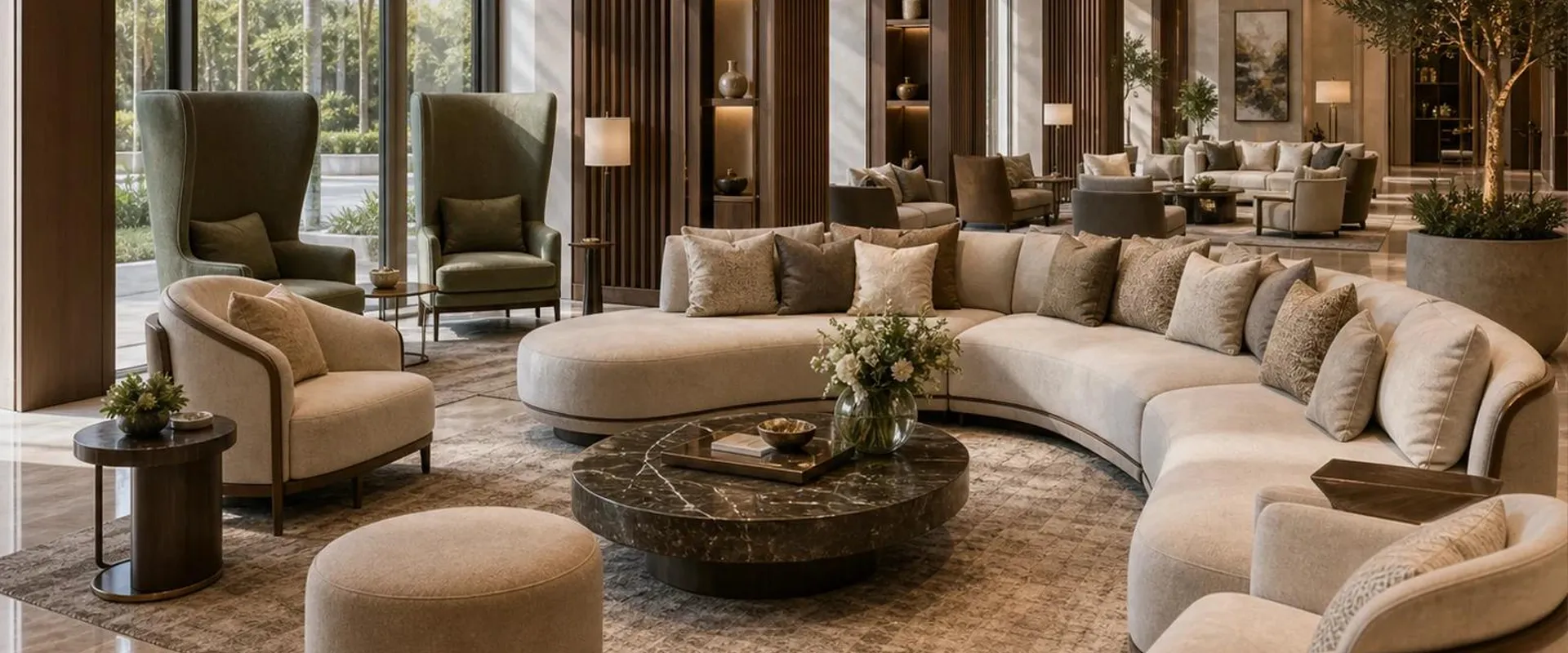
MingMeng Furniture is based in Guangzhou, Guangdong, within the Pearl River Delta’s established furniture manufacturing region. Our product range includes guestroom casegoods, upholstered seating, fixed banquette seating, lobby furnishings, restaurant and bar furniture, meeting room furniture, outdoor furniture, and custom millwork. We provide flexible furniture solutions for hospitality projects of varying sizes, from boutique hotels to larger hotel and resort developments.
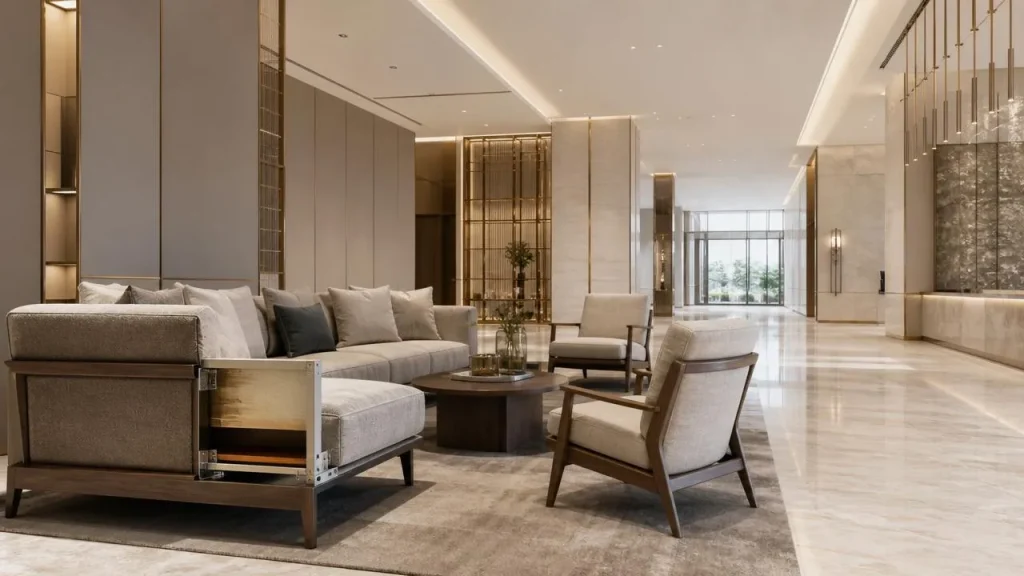
We work with hotel owners, FF&E procurement firms, and interior designers who need a supplier that can move from concept sketches to approved shop drawings, through prototype and into production, on the timeline the project demands.
What our process looks like:
- Brief review and scope confirmation. We identify missing information before quoting, not after.
- Shop drawings and material schedule. Our engineering team produces production-ready drawings from your concept.
- Sample production. A physical sample within 【实际打样周期】, approved before bulk production.
- Staged production with photographic QC checkpoints at each major milestone.
- Pre-shipment inspection by MingMeng or by your appointed inspector, your call.
- Delivery, installation guidance, and a spare-parts buffer.
We can provide relevant quality management certificates, material documentation, and product-specific test reports upon request, subject to their scope and validity. Our team can also share available hotel furniture project references to help buyers evaluate our manufacturing capabilities.
Browse our hotel furniture range and project cases, or describe your project to our team below.
FAQ
Is it worth paying more for a European hotel furniture manufacturer?
Only when brand standards, contract jurisdiction, or material sourcing requirements demand it — typically at the ultra-luxury tier (USD 6,000+ per key) or when serving a European brand operator whose procurement standards require it. For most midscale-to-upscale hotel projects, a well-qualified Chinese Tier 2 manufacturer delivers equivalent results at roughly 30–45% lower cost.
What certifications should I require from a Chinese hotel furniture supplier?
At minimum: ISO 9001 (quality management), CAL-117 or BS 5852 / CRIB-5 (fire safety for upholstered seating), FSC or CARB Phase 2 / E1 (formaldehyde emissions for composite wood), and a written warranty. For coastal properties, specify grade 316 stainless steel hardware.
How do I control quality before production begins?
Three controls work best: (1) approve a physical production sample against a documented reference standard before bulk production; (2) include a pre-shipment inspection clause in the contract with acceptance criteria tied to the approved sample; (3) request photographic QC documentation at each major production milestone, not just a final QC report.
What is a reasonable lead time for Chinese hotel furniture?
Ready-stock items take 4–8 weeks; custom casegoods 10–18 weeks; custom upholstered seating 12–22 weeks; highly bespoke millwork 16–24 weeks. Always add 2–3 weeks for sample development before the production clock starts.
How do I avoid the “right sample, wrong production” trap?
The approved sample must be physically tagged, photographed, and referenced in the contract as the quality standard, and every batch is inspected against it. Include a change-order freeze point: once the sample is approved, any change to materials, finishes, or construction triggers a documented revision with cost and timeline impact.
Do tariffs change the Chinese vs Western comparison?
They can. Duties on Chinese-made furniture have changed repeatedly in recent years, so confirm the current rate for your product’s HTS code and destination before comparing quotes, and have every supplier quote on the same Incoterms basis. Compare landed cost, not unit price.