Hotel upholstered furniture is usually specified by appearance and bought by price, and it fails in a predictable order: the seat goes first, then the frame, then the fabric at the arm.
Each of those failures is governed by a number, and none of them appears on a rendering. Put the six below into your specification and the factory has to build to them. Leave them out and the factory will choose — usually from whatever is already on the floor.
The six, in one line: foam density, suspension type, frame moisture content, abrasion plus pilling, cushion construction, seam and nap direction.
The six numbers at a glance
Print this table, fill the right-hand column with what your project actually specifies, and send it with the enquiry. A factory that receives it will quote the build, not the look.
| # | Number | What to write down | Where it goes wrong |
|---|---|---|---|
| 1 | Foam density | kg/m³ per component (seat, back, arm) | Compression set in 12–24 months |
| 2 | Suspension | Type and fixing method | Seat hollows at the centre |
| 3 | Frame | Species, moisture content at assembly, joint method | Creaks, rocks, glue lines open |
| 4 | Abrasion | Martindale rubs + pilling rating | Fabric shines and pills at 18 months |
| 5 | Cushion | Core, wrap, cover, rotation clause | One face flattens, the rest is fine |
| 6 | Seam | Seam type, allowance, nap direction | Splits at the arm |
Our hotel lobby furniture projects run this list before pricing, because each line changes the build and therefore the number at the bottom.
1. Foam density — and why “high density” is not a number
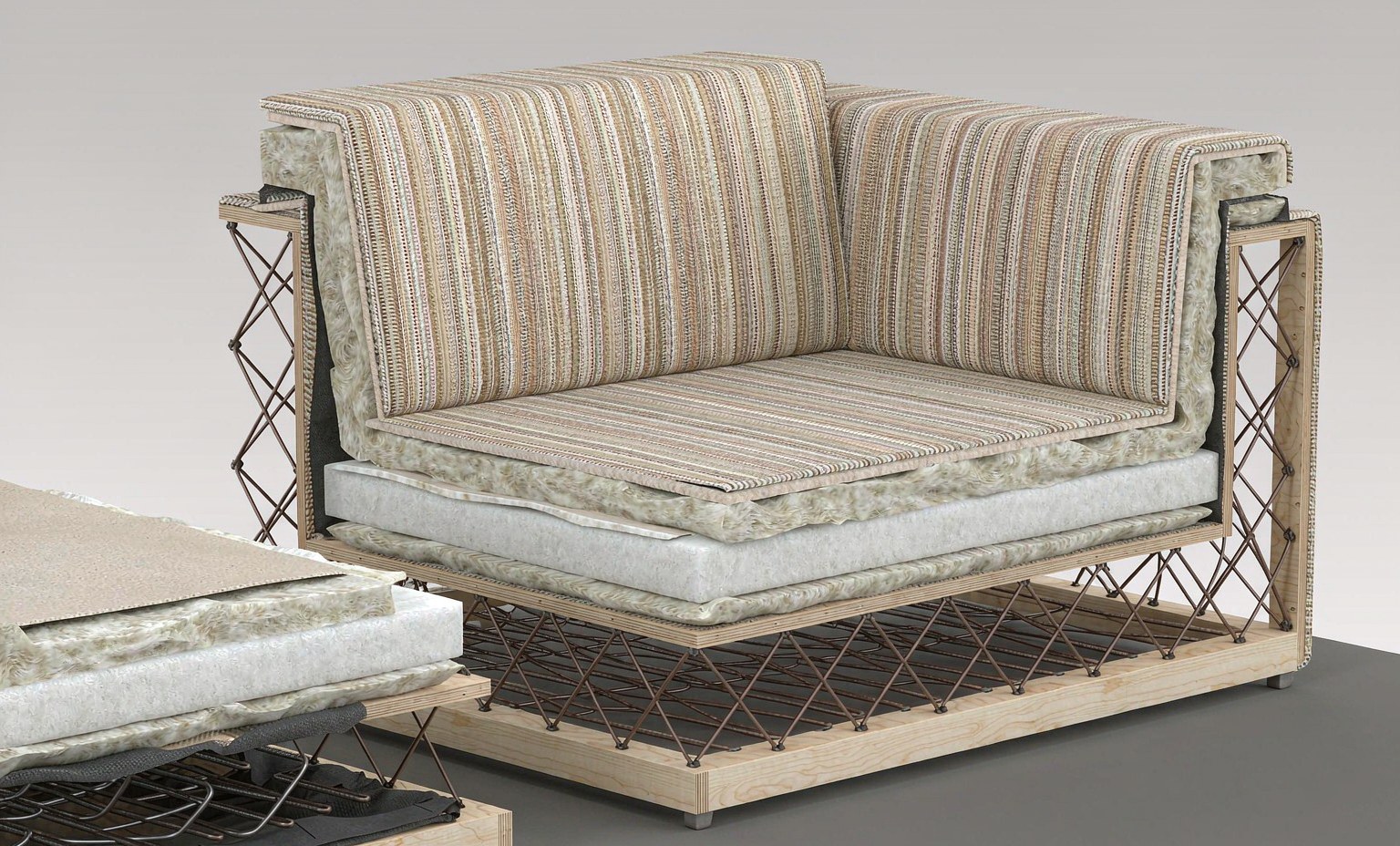
Density is mass per volume, in kg/m³. Hardness is a separate measurement, describing how firm the foam feels when pressed. They move independently: a 45 kg/m³ foam can feel soft, and a 28 kg/m³ foam can feel firm for about eight months.
The firm one is the more expensive mistake, because it feels correct in the showroom.
Ranges that work, by position
| Component | Common contract range | Below it |
|---|---|---|
| Seat cushion core | approx. 35–45 kg/m³ | Compression set within a year; the front edge ridges first |
| Back and arm pads | approx. 25–32 kg/m³ | Softer is fine here; too soft reads as hollow |
| Seat platform | firm, often 30 kg/m³+ | The cushion has nothing to sit on and takes all the load |
Bedroom seating can sit at the lower end because it is used for a fraction of the hours. Lobby and bar seating cannot, which is the whole argument for specifying by area rather than by model.
What to ask for
Ask for the supplier’s technical data sheet by product code, and ask which code was used in the sample you approved. Then write that code into the specification. “High-density foam” in a quotation is a mood, not a specification.
The three figures to copy from the sheet
Density in kg/m³, indentation hardness at 25% compression, and compression set after the standard test. Those three decide how the seat feels on day one and how it looks in year three. The product name on the front of the sheet is marketing; these three are the build.
2. Suspension — what is holding the foam up
Elastic webbing is quiet, repairable from below and predictable. Sinuous springs give a livelier seat but concentrate load at the clips. Pocket springs behave closest to a mattress and cost the most.
None of the three is wrong. What is wrong is a specification that names the foam and leaves the suspension to the factory’s default.
Most “collapsed foam” is a suspension failure
When a seat hollows at the centre and the foam measures close to its original thickness, the foam was never the problem. A stretched web or a moved clip pushed the load to the edges, and the foam was simply compressed where the load went.
This matters commercially: a failed suspension can often be repaired on site by removing the dust cover. A collapsed core cannot.
A test you can run with one knee
Kneel on the seat near the front edge for ten seconds, then repeat at the centre. If the front bottoms out and the centre holds, the suspension is uneven. If both bottom out, the foam is too soft for the use. If it pushes back evenly, photograph it — that is your baseline for a warranty conversation two years later.
3. Frame — moisture content and joint method
“Kiln-dried hardwood” appears in nearly every hotel furniture quotation and says almost nothing. Timber is dried to a target range, commonly around 8–12%, and the figure that matters is the moisture content at the moment of assembly, in the factory’s own climate.
Wood assembled too dry takes on moisture in a humid lobby and the joints move. Wood assembled too wet shrinks and opens a glue line. Either way the symptom arrives six months later as a creak.
Dowels, corner blocks and glue versus staples
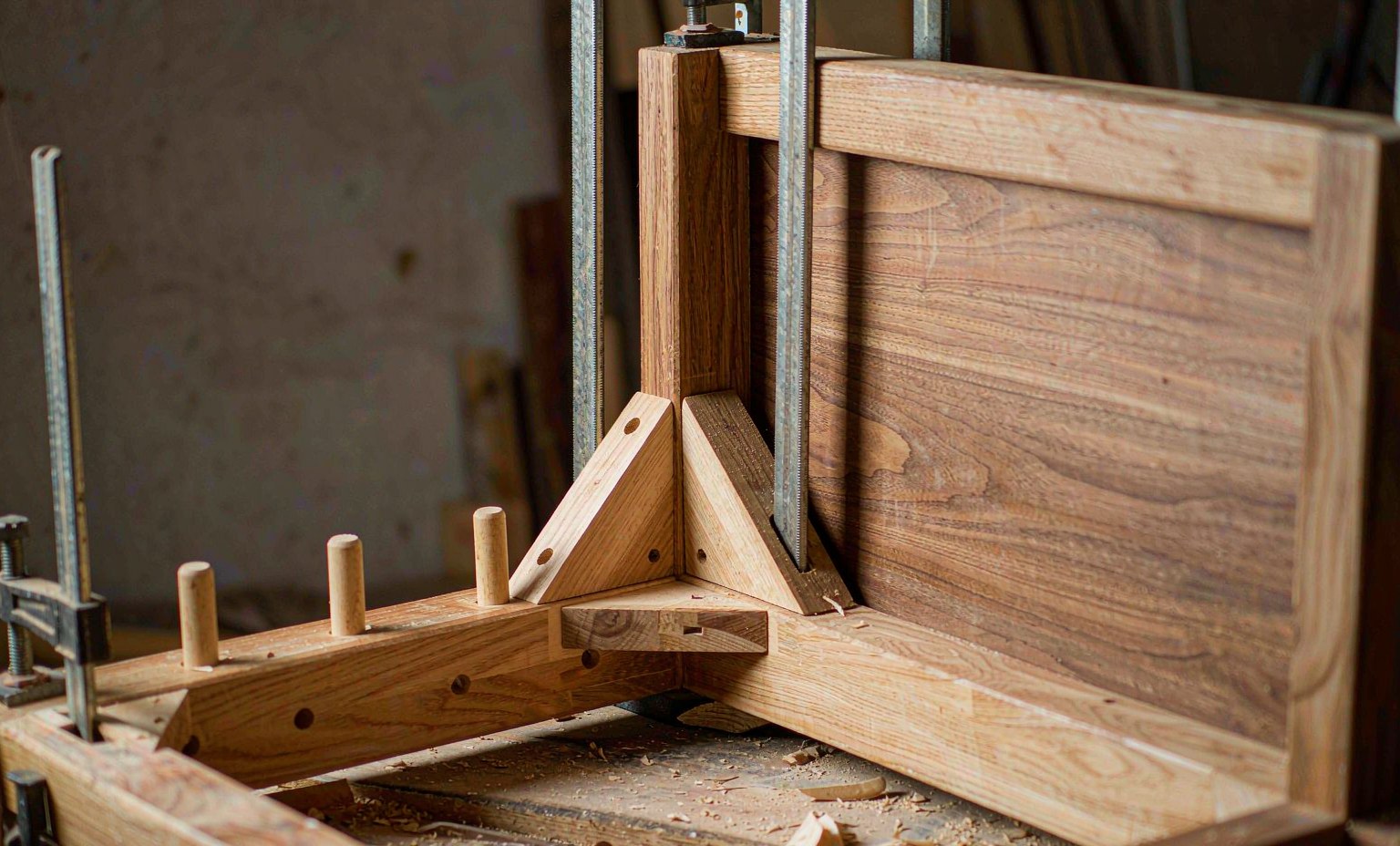
A structural corner in contract seating is usually dowelled or mortised, glued, and reinforced with a solid corner block. Staples hold a shape; they do not hold a load path.
Both look identical from the outside, which is why the frame inspection happens before upholstery and not after.
The thirty-second frame check
Ask for one frame on video before it is covered. Look for four things: a corner block at every load-bearing corner, glue squeeze-out at the joint line, consistent timber colour with no filler at the joint, and a batch or date mark on the frame itself.
If the video is refused
That is information too. Offer to send your own inspector, or ask for photographs of the bare frame with a tape measure held against the corner block. A factory that will not show a frame before upholstery is usually telling you that the frame is not the part it wants discussed.
This is the same logic that makes shop drawings worth signing carefully: the drawing and the frame are the two places where a specification either holds or quietly stops existing.
4. Abrasion — and the second number beside it
Martindale measures resistance to surface wear under a standard abrasive. Thirty thousand rubs is a common contract floor; heavy-use public areas often go higher.
What it does not tell you is whether the fabric will pill, snag on a zip, or shift colour under window light. Those are different tests and different complaints.
Pilling is the number that gets left out
Pilling is fibre migration — loose fibres balling on the surface. It is rated separately, and it is the most common reason a fabric that passed abrasion still looks tired at eighteen months.
Put both numbers next to the finish code
The most common specification failure here is administrative rather than technical. The rub count is agreed in an email, the finish code is approved on a sample tag, and the two never meet.
Write abrasion and pilling results beside the finish code on the approved schedule. When the code is substituted — and it will be, at least once — the numbers travel with it.
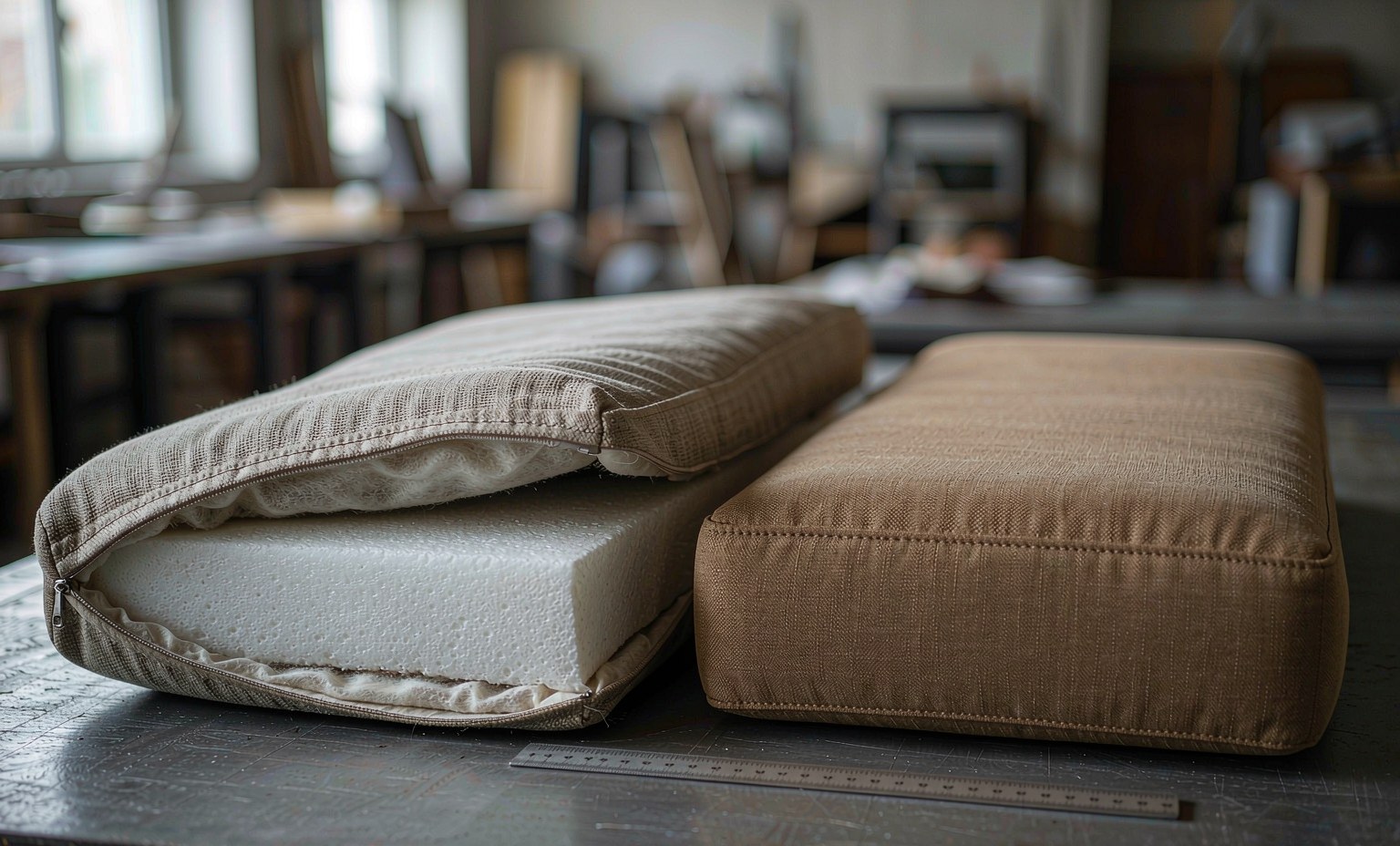
5. Cushion construction and the rotation clause
A foam core wrapped in fibre gives a firmer seat that recovers predictably. Feather-and-down gives the sink and the crease that photographs well and needs daily attention; it also loses loft, and in a lobby it will be flat by mid-morning.
For public areas the practical answer is usually a foam core with a fibre or blended wrap, in a cover that can be removed and cleaned. In guest room furniture the same build works, with a lower density because the hours of use are lower.
Write the rotation clause into the handover
A loose cushion that is never turned fails on one face only, and it fails earlier than a fixed seat that was never expected to last. If the design uses loose cushions, the maintenance schedule needs a line item: rotate weekly, flip monthly.
Put it in the handover document. A clause nobody reads is cheaper than a clause nobody wrote.
The sentence to put in the O&M manual
“Loose seat cushions to be rotated weekly and flipped monthly; covers cleaned per the fabric supplier’s code.” One line, in the maintenance section, next to the lift service interval — where housekeeping will actually see it.
6. Seam, pattern repeat and nap direction
A plain seam with a top-stitch is the workhorse. A welt cord gives a crisp line and a wear point where the cord meets the arm. A French seam hides the raw edge and costs time.
The seam is where fabric fatigue concentrates, because the stitch line perforates the weave. That is why a fabric that performs well on a flat panel can split at the arm within a year.
Pattern repeat is a cost decision, not only a design one
On a stripe or a large repeat, matching across a seat and a back can add 15–25% to the fabric consumed. Price it before you approve it, and check the yield against the fabric minimum.
Velvet has a nap, and it shows
Cut in one direction velvet reads dark, in the other light. Piece two directions onto one sofa and it will look like two fabrics under downlights — and no photograph of a sample will reveal it. Mark nap direction on the cutting instruction, in words.
Where it fails first
Sit on the sample and put your hand on the arm exactly where a guest pushes themselves up. That single point carries the most repeated stress on the piece — and on meeting room chairs, the same is true of the front edge of the seat.
The twelve-second sample approval test
At sample approval most buyers look. The useful information comes from sitting, in a fixed order, so two samples can be compared.
| What to do | What it tells you |
|---|---|
| Sit, stand, then look at where you were sitting | Recovery: a dent that lasts 30 seconds will last a year |
| Press the front edge with the heel of your hand | Whether there is a firm edge or a void behind the cushion |
| Push the back sideways at shoulder height | Frame rigidity, and whether the top rail will loosen |
| Kneel on the seat for ten seconds | Suspension evenness and where the load goes |
| Run a thumb along the arm seam | Seam allowance, stitch density, straightness of the welt |
| Lift one side by the arm | Weight distribution, and whether the frame flexes as one piece |
Photograph the results next to the sample tag. In two years that photograph is the only evidence of what you approved.
Five lines for the purchase order
- Foam: supplier code, density and hardness, per component — not per sofa
- Suspension: type and fixing method, named
- Frame: species, moisture content range at assembly, joint method
- Fabric: finish code with abrasion and pilling results beside it
- Cushions: core, wrap, cover construction, and the rotation clause
Everything else — silhouette, finish, price — travels in the drawing and the invoice. These five do not survive a conversation.
Four substitutions that quietly void a good specification
- A different foam grade “of the same density”. Hardness and compression set move independently.
- An “or equal” fabric. The equal is usually equal in colour, not in rubs or pilling.
- A lighter interliner. Changes the hand, the price, and the evidence behind the fire performance.
- A shorter corner block. Invisible, and it changes how the frame carries load for its whole life.
Any of these can appear legitimately, but only if it is written as a deviation, dated, and approved by the person who owns the specification.
Questions that arrive with the first sample
The sample feels firmer than the showroom sofa. Is that wrong?
Not necessarily. A new core is at its firmest on day one and softens over the first weeks. Judge the sample against the intended use, and ask what the foam is expected to feel like after three months.
Can we specify a well-known foam brand and stop worrying?
A brand narrows the range; it does not replace the number. Ask for the grade within that brand, the density, and the data sheet for the exact code — two grades from one supplier can differ by 15 kg/m³.
The designer wants a fabric rated for light domestic use. What now?
Use it where it will not be sat on in wet clothes — headboard, screen, decorative panel — and put a contract-rated textile on the seat and arms. Mixed-material pieces are normal in hospitality; one fabric for the whole piece is a residential habit.
Do we need to test the finished sofa, or just the fabric?
That depends on the destination’s fire requirements, which are a separate subject and covered in our guide to hotel furniture fire standards by market. Structurally, what you want is the frame and foam specification locked to a drawing revision.
How long should a lobby sofa last?
A well-specified piece in a busy lobby should hold its shape for five to seven years, with reupholstery as a mid-life event. Three years means something in the build was specified for a bedroom.
None of these six numbers is exotic. They are ordinary industrial facts that do not appear in a rendering, which is why they get left to whoever builds the piece.
If you are writing a seating specification now, send the drawing and the intended use — lobby, suite, restaurant, meeting floor — and the build can come back with the numbers attached. The full range is on the hotel furniture page.